
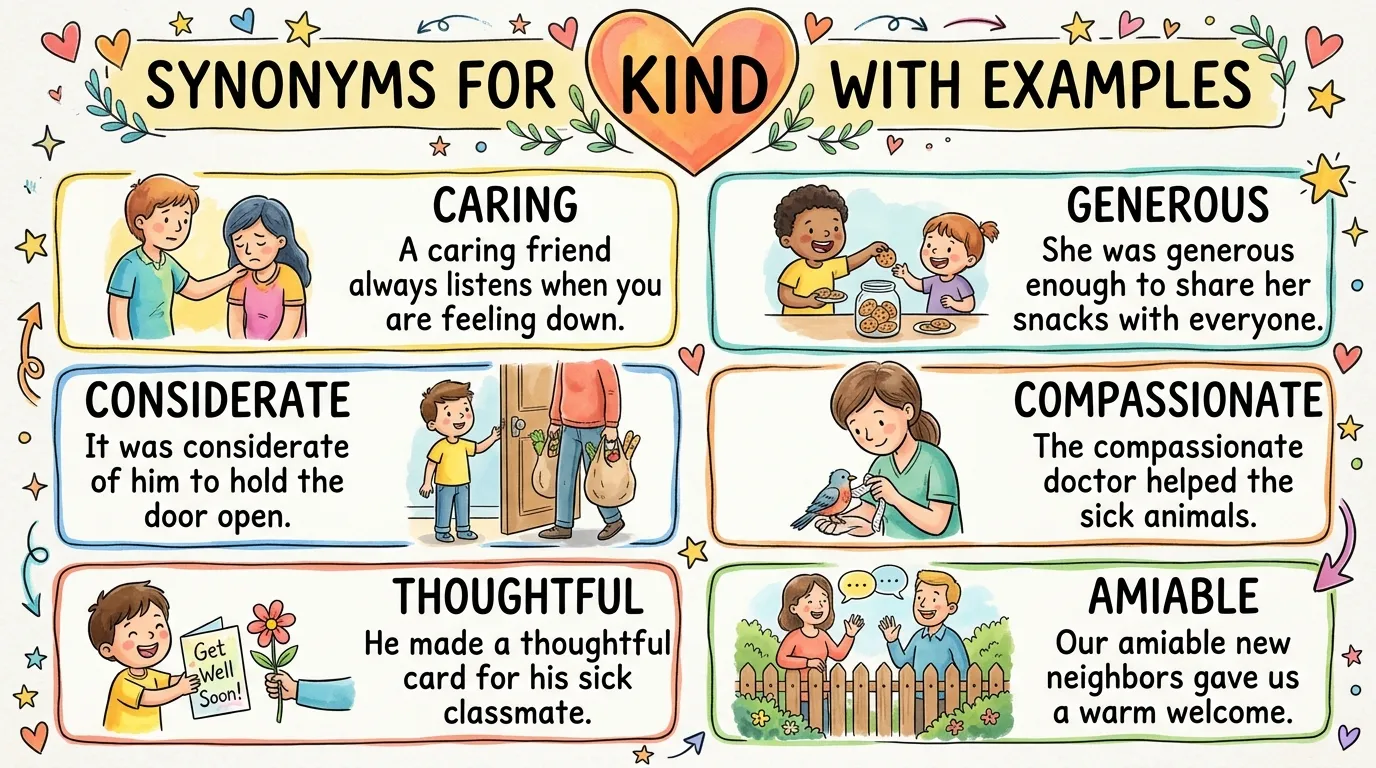
The most useful synonyms for kind are caring, considerate, thoughtful, generous, compassionate, gentle, and friendly. But first, check which “kind” you mean. As an adjective, kind means nice and caring (“a kind teacher”). As a noun, kind means type or sort (“what kind of music?”). This guide covers both meanings, plus the casual phrase “kind of,” with 40 synonyms and real example sentences.
Which “Kind” Do You Mean?
| If you mean… | Example | Use synonyms like… |
| nice and caring (adjective) | She is a kind neighbor. | caring, thoughtful, generous |
| type or sort (noun) | What kind of car is it? | type, sort, variety |
| a little; somewhat (casual) | I’m kind of tired. | somewhat, rather, a bit |
Most people searching for this word need the first meaning, so let’s start there.
Part 1: Synonyms for Kind (Nice and Caring)
Kindness comes in many forms. A nurse who listens is kind in a different way than a neighbor who shares tomatoes from her garden. So, think about what the person actually does, and pick the word that matches.
The Person Who Notices Your Needs
These words describe someone who pays attention and acts before you even ask.
- Considerate – careful not to hurt or bother others.
Our considerate neighbors keep their music low after 9 p.m.
- Thoughtful – thinking about what others need or want.
What a thoughtful gift; you remembered I love gardening!
- Helpful – ready to help.
The helpful clerk walked me to the right aisle.
- Attentive – watching closely and caring for someone.
The attentive waiter refilled our water before we asked.
The Person Who Gives
These words describe someone who shares time, money, or things freely.
- Generous – happy to give more than expected.
My generous uncle paid for everyone’s dinner.
- Charitable – giving help to people in need.
She does a lot of charitable work at the food bank.
- Big-hearted – very kind and generous.
Our big-hearted coach drives kids home after practice.
- Giving – generous by nature.
He has a giving spirit and never says no to a friend.
The Person Who Is Soft and Gentle
These words fit someone calm, soft-spoken, and careful with others.
- Gentle – kind and calm, never rough.
The vet was gentle with the frightened puppy.
- Tender – loving and soft in a caring way.
She gave the baby a tender kiss on the forehead.
- Soft-hearted – easily moved to help or forgive.
My soft-hearted dad can never say no to stray cats.
The Person Who Understands Your Feelings
These words describe someone who feels with you, not just for you.
- Caring – showing concern for others.
We have the most caring nurses on this floor.
- Compassionate – feeling deep concern for someone’s pain and wanting to help.
The compassionate doctor took time to answer all our questions.
- Sympathetic – showing that you understand someone’s sadness.
My boss was sympathetic when my mother was sick.
- Understanding – patient and accepting of others’ problems.
Thanks for being so understanding about the delay.
- Empathetic – able to imagine and share another person’s feelings.
An empathetic friend listens without judging.
The Person with Good Manners
These words focus on respect and politeness.
- Courteous – polite and respectful.
The courteous driver waved us across the street.
- Gracious – kind and polite, especially when it isn’t easy.
She was gracious in defeat and congratulated the winner.
- Well-mannered – behaving politely.
Their well-mannered kids said thank you after the meal.
The Person Who Is Patient and Forgiving
- Patient – staying calm and kind when things take time.
Our patient teacher explained fractions three different ways.
- Forgiving – willing to stop being angry.
He’s forgiving and never holds a grudge.
- Tolerant – accepting of people who are different.
A tolerant community welcomes newcomers.
The Person Who Is Warm and Friendly
- Warm – friendly and welcoming.
The host gave us a warm welcome.
- Friendly – pleasant and easy to talk to.
The new kid in class is shy but very friendly.
- Affectionate – showing love openly.
Our affectionate golden retriever greets everyone at the door.
Formal Words for Kind (for Essays and Speeches)
- Benevolent – wanting to do good for others.
The benevolent founder left her fortune to local schools.
- Humane – showing kindness, especially to people or animals who suffer.
The shelter is known for its humane treatment of animals.
- Altruistic – helping others without expecting anything back.
Donating a kidney to a stranger is an altruistic act.
- Magnanimous – generous and forgiving, especially toward a rival.
The champion was magnanimous and praised her opponent.
A Casual Word for Kind
- Sweet – kind and pleasant (informal).
That’s so sweet of you to bring me soup!
Part 2: Synonyms for Kind (Type or Sort)
When kind means “type,” these words work instead:
| Word | Example |
| Type | What type of phone do you have? |
| Sort | She likes all sorts of music. |
| Variety | This variety of apple is very sweet. |
| Category | The book won in the fiction category. |
| Class | First class is more expensive than economy. |
| Genre | Horror is my least favorite movie genre. |
Part 3: Synonyms for “Kind of” (A Little)
In casual speech, “kind of” means “a little.” However, it sounds too informal for essays. So, use these instead:
- Somewhat – The test was somewhat difficult.
- Rather – The movie was rather long.
- Slightly – I’m slightly worried about the weather.
- Sort of (still informal) – It’s sort of cold today.
Kind Words for Thank-You Notes and Cards
“You’re so kind” is nice, but a specific word feels more personal. For example:
- To a teacher: “Thank you for being so patient and encouraging with Emma this year.”
- To a nurse or doctor: “Your compassionate care made a hard week much easier.”
- To a neighbor: “Thank you for the thoughtful meal after our move.”
- To a coworker: “I really appreciate how helpful you were during my first month.”
- To a host: “Thank you for your generous hospitality this weekend.”
Small Differences That Matter
Kind vs. nice
Nice is very general. Kind, on the other hand, suggests real care for others. Someone can be nice to your face without being truly kind.
Sympathetic vs. empathetic vs. compassionate
A sympathetic person feels sorry for you. An empathetic person imagines how you feel. A compassionate person feels your pain and wants to help.
Generous vs. charitable
Generous can describe giving to anyone, such as friends or family. Charitable, however, usually means giving to people in need or to good causes.
Benevolent vs. kind
Benevolent is more formal. Also, people often use it for leaders, organizations, or donors, such as “a benevolent ruler.”
Opposites of Kind
The most common opposites are unkind, mean, cruel, harsh, and selfish. Cruel is the strongest, because it means causing pain on purpose.
Common Mistakes with “Kind”
1. “Kind of you” vs. “kind to you”
Use kind of + person to thank someone: “It was kind of you to help.”
Use kind to + person to describe how someone treats others: “She is kind to animals.”
2. “These kind of” mistakes
Wrong: I love these kinds of shoes.
Right: I love this kind of shoe. / I love these kinds of shoes.
3. Using “kind of” in formal writing
Wrong: The results were kind of surprising.
Right: The results were somewhat surprising.
4. Confusing “empathetic” and “empathic”
Both words exist and mean the same thing. However, empathetic is far more common in everyday American English.
Practice: Match the Person to the Word
Choose the best word for each person: compassionate, generous, patient, courteous, thoughtful, gentle
- A friend who remembers your birthday and your favorite cake.
- The driver who lets you merge into traffic and waves.
- Your coach explains the play again without getting upset.
- A nurse who comforts a scared patient and stays with her.
- One man gives half his paycheck to a family in need.
- Grandpa holds the newborn very carefully.
Answers: 1. thoughtful 2. courteous 3. patient 4. compassionate 5. generous 6. gentle
FAQs:
What is a stronger word for kind?
Compassionate, big-hearted, and magnanimous are all stronger. Compassionate is the best choice when someone helps a person who is suffering.
What is a formal word for kind?
Benevolent, considerate, courteous, and altruistic all sound formal. For example, “The donor’s benevolent gift funded a new library.”
What is another word for “kind-hearted”?
Try big-hearted, soft-hearted, warm, or caring. Each one describes a person whose kindness comes naturally.
Is “kind of” grammatically correct?
Yes, but it is informal. In speech, “I’m kind of hungry” is fine. In essays and emails, however, use somewhat or slightly instead.
Conclusion:
“Kind” can describe a caring person, a type of thing, or even “a little” in casual speech. For people, choose the word that shows how they are kind: thoughtful for noticing needs, generous for giving, compassionate for comforting, and patient for staying calm. To describe other good qualities, read our synonyms for good next. Practice task: Write a two-sentence thank-you note using thoughtful and generous.
